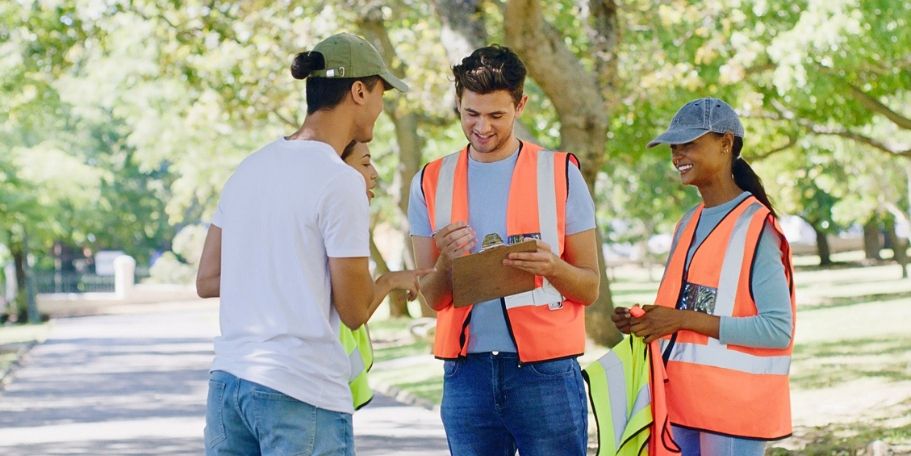
Civic volunteering covers any organized participation that supports local government, public institutions, or community infrastructure. It's the poll worker who shows up at 5 a.m. on election day. It's the resident who signs up to speak at a city council meeting. It's the parent who coaches a parks and rec team or the neighbor who plants trees on a Saturday morning.
What sets civic volunteering apart from other volunteer programs is the layer of accountability involved. These roles often directly support public services, which means no-shows have real consequences. A polling location that opens short-staffed or a public hearing with no sign-up process in place creates friction for everyone involved, including the constituents those programs are meant to serve.
That accountability is also what makes coordination so important. When civic volunteer programs run well, participation feels easy and natural. When they don't, coordinators end up spending more time managing logistics than actually supporting their volunteers.
Common Use Cases for Civic Volunteer Coordination
Civic volunteer programs take many forms depending on the department, organization, or community need behind them. Some of the most common include:
Election volunteer coordination is one of the highest-stakes civic volunteer programs in any jurisdiction. County election offices, party organizations, and nonpartisan civic groups all need to recruit, schedule, and confirm poll workers, ballot processing volunteers, and canvassing teams on a tight timeline. Read the full guide to .
“I just coordinated a giant rowing event using SignUpGenius. I was able to manage the 142 volunteers quite effortlessly thanks to you all! The event went beautifully. I was able to email the folks I needed to easily, and the reminder email was perfect. Thanks for creating a really wonderful site.”
From election day coverage to public meetings and parks programs, civic volunteer coordination runs on clear communication and reliable sign ups. Here's how to make it work.
Public meeting participation requires a different kind of coordination. Planning commissions, city councils, and zoning boards regularly need to manage speaker sign-up sheets, testimony queues, and public comment periods. A structured sign-up process keeps meetings orderly and ensures every voice gets its fair time. See how to manage public meeting sign-ups.
Parks and recreation programs rely on volunteer coaches, referees, and event helpers to run seasonal leagues, tournaments, and community events. Managing sign ups by sport, age group, or location is far easier with a centralized system than with a spreadsheet or email chain.
Municipal volunteer programs cover everything from library reading buddies and senior center helpers to animal shelter volunteers and neighborhood beautification crews. These programs often run year-round and benefit most from a consistent, repeatable sign-up process.
Advisory boards and civic committees need a clear way to recruit applicants and schedule orientation sessions or interviews. A sign-up sheet with slot limits and automatic reminders reduces the back-and-forth that typically bogs down this process.
One Platform for Every Civic Program
SignUpGenius supports volunteer coordination across every type of civic program, from election day staffing to parks leagues and public hearings. Set up a sign up in minutes and share one link with your community.
Anyone who has coordinated volunteers for a government program or civic organization knows the pattern: you send an email asking for help, a few people respond, others mean to but forget, and you end up making phone calls the day before the event trying to fill gaps.
The core challenges tend to cluster around a few recurring problems.
Visibility into coverage. Without a centralized sign-up, it's hard to know at a glance whether you have enough volunteers for every shift or location. Coordinators often find out about gaps too late to do anything about them.
Confirmation and follow-through. Volunteers who sign up informally, through email or a paper sheet, are more likely to forget or drop out without notifying anyone. Automatic reminders change this dynamic significantly.
Reaching the right people. Civic volunteer programs often rely on the same core group of participants. Growing that base requires making it easy for new volunteers to find and claim a slot without needing to call an office or send an email.
Managing multiple roles and locations. Election day alone can involve dozens of polling locations, each needing a specific number of workers in specific roles. A single sign-up with grouped slots by location or role type is far easier to manage than a separate process for each site.
Genius Tip
Set up your sign up with grouped slots by location or role so volunteers can self-select based on where they want to serve. Real-time coverage tracking means you always know exactly where you still need people.
How to Organize Civic Volunteers Effectively
Getting civic volunteer coordination right comes down to a few practical steps that apply across almost every program type.
Start with a clear structure. Before you recruit a single volunteer, map out what you actually need: how many people, in what roles, at what times and locations. Vague asks get vague responses. A sign-up with named slots and specific time windows makes it easy for people to say yes to something concrete.
Make the sign-up process frictionless. Every additional step between a willing volunteer and a confirmed slot is a place where participation drops off. A well-built sign-up sheet that anyone can access from a shared link, without creating an account or filling out a lengthy form, keeps momentum going.
Send reminders automatically. The gap between signing up and showing up is where most no-shows happen. Automatic reminders at 48 hours and again the morning of an event dramatically improve follow-through, especially for civic programs where volunteers may not feel the same personal accountability as paid staff.
Build in a confirmation step. For high-stakes programs like election day coverage, a confirmation response from each volunteer gives coordinators a clear picture of actual attendance versus registered attendance. Tools that support two-way communication make this easy.
Keep records for next time. Civic volunteer programs often run on the same calendar year after year. A sign-up system that lets you review past participation, identify reliable volunteers, and duplicate a previous sign-up structure saves significant time when the next cycle comes around.
For a deeper look at volunteer scheduling best practices across all program types, see our guide to volunteer scheduling
Tools and Resources for Civic Volunteer Programs
The right coordination tools make a measurable difference in how civic volunteer programs run. The comparison below covers the most common approaches organizers use.
Coordination Method
Best For
Common Limitations
Email or phone outreach
Small, familiar volunteer groups
No central record, hard to track coverage, time-intensive
Paper sign-up sheets
In-person events with on-site coordination
No reminders, no real-time visibility, easily lost
Spreadsheets
Teams comfortable managing data manually
Version control issues, no automation, no slot limits
Online sign-up tools
Any program needing coverage visibility and reminders
Minimal for purpose-built tools; setup takes a few minutes
Enterprise VMS platforms
Large organizations tracking hours and credentials
High cost, steep learning curve, often overkill for civic programs
For most civic programs, a purpose-built sign-up tool hits the right balance: easy enough for a part-time city clerk to set up in an afternoon, capable enough to handle dozens of shifts across multiple locations with automatic reminders going out to every volunteer.
Election Volunteer Coordination
A step-by-step guide to recruiting, scheduling, and confirming poll workers and election day volunteers across multiple locations.
A civic volunteer is someone who contributes time to support local government functions, public institutions, or community programs. Common examples include poll workers, public meeting speakers, parks and rec coaches, library volunteers, and neighborhood beautification participants.
How do I recruit more civic volunteers?
The most effective approach is making it easy to say yes. A clear sign-up with specific slots, times, and roles gives potential volunteers something concrete to commit to. Sharing the sign-up link through community email lists, neighborhood apps, and local government social channels helps reach people who want to participate but don't know how to get started.
What tools work best for managing civic volunteers?
For most civic programs, a purpose-built sign-up tool covers the essentials: slot limits, automatic reminders, real-time coverage tracking, and a shareable link that volunteers can access without creating an account. Enterprise volunteer management systems add hours tracking and credential verification but are typically more than most local programs need.
How do I handle last-minute volunteer cancellations?
Build a short waitlist into your sign-up structure so confirmed cancellations trigger an automatic notification to the next available volunteer. Sending reminder messages a few days before the event also reduces day-of cancellations significantly.
Can one sign-up work for multiple locations or roles?
Yes. Organizing slots by location or role within a single sign-up makes it easy to track coverage across the whole program from one place. Volunteers can see exactly where they're needed and choose the option that works best for them.
How to Coordinate Election Volunteers
Everything you need to recruit, schedule, and confirm poll workers and election day volunteers from one sign up.